Weren’t vs. Wasn’t: Easy Guide for Perfect English Grammar


Quick Answer
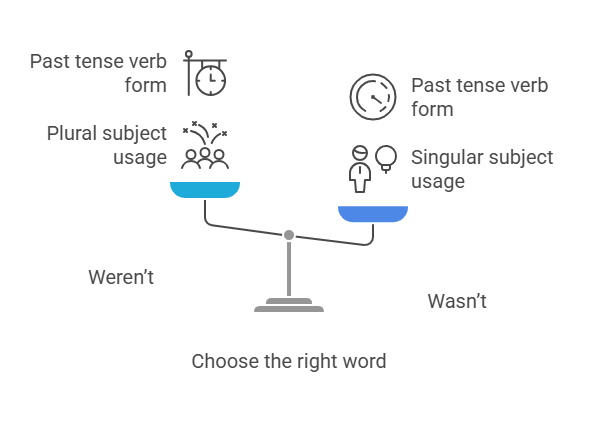
Wasn’t is short for “was not.” Use it with I, he, she, it. Weren’t is short for “were not.” Use it with you, we, they. Example: “She wasn’t home” but “They weren’t home.”
Wasn’t and Weren’t — See the Pattern
Look at these sentences. Can you see which subjects go with wasn’t and which go with weren’t?
- I wasn’t tired last night.
- He wasn’t at the shop.
- You weren’t late today.
- They weren’t at the park.
Did you see the pattern? Wasn’t goes with one person or thing. Weren’t goes with more than one — or with you.
| Subject | Use | Example |
|---|---|---|
| I, he, she, it | wasn’t | She wasn’t happy. |
| you, we, they | weren’t | They weren’t ready. |
When to Use Wasn’t and When to Use Weren’t
Wasn’t goes with one person or one thing:
- I wasn’t hungry.
- He wasn’t at work today.
- She wasn’t feeling well.
- It wasn’t cold outside.
Weren’t goes with more than one person — and with you (even when you are talking to just one person):
- You weren’t there when I called.
- We weren’t sure about the time.
- They weren’t at school yesterday.
Easy way to remember: Think of the positive form first. “Was” becomes wasn’t. “Were” becomes weren’t. If you would say “I was,” the negative is “I wasn’t.” If you would say “they were,” the negative is “they weren’t.”
The Rule in One Line: Wasn’t = I/he/she/it. Weren’t = you/we/they. Always.
How to Use Wasn’t and Weren’t in Everyday English
- I wasn’t sure what to say. (I = one person → wasn’t)
- She wasn’t feeling well this morning. (she = one person → wasn’t)
- You weren’t there when I called. (you → always weren’t)
- We weren’t expecting rain today. (we = more than one → weren’t)
- It wasn’t easy, but we did it. (it = one thing → wasn’t)
You are doing great. Now let’s look at the mistakes many learners make.
Three Mistakes to Avoid With Wasn’t and Weren’t
Even advanced learners mix up wasn’t and weren’t sometimes — so if you get confused, you are not alone. The most common mistake is using wasn’t with plural subjects like “they” or “you.”
✗ They wasn’t happy with the food.
✓ They weren’t happy with the food.
✗ You wasn’t listening to me.
✓ You weren’t listening to me.
✗ He weren’t at school yesterday.
✓ He wasn’t at school yesterday.
How to remember: Ask yourself — “one or more?” One person or thing = wasn’t. More than one (or “you”) = weren’t.
Test Yourself: Wasn’t or Weren’t?
Choose the correct answer for each sentence. Click Check to see if you are right.
1. She _______ at the party last night.
2. They _______ ready for the test.
3. You _______ listening to me!
4. It _______ a difficult question.
5. We _______ sure about the answer.
Keep Going — You Are Building Something
You just learned when to use wasn’t and weren’t. That is one more grammar rule you will never get wrong again.
But here is something interesting: is and are follow the same kind of pattern in the present tense. Do you know when to use each one? And what happens when the subject is tricky — like “everyone” or “the team”?
Next lesson: Is or Are? 3 Simple Tips to Always Get It Right

My name is Khamis Maiouf. I am the creator of the English Teacher Site, dedicated to providing valuable resources and insights for students around the world. With a passion for education and a commitment to helping students enhance their skills, I aim to make English teaching more effective and enjoyable for both educators and students.