
The Last Envelope (B1 Reading Story)

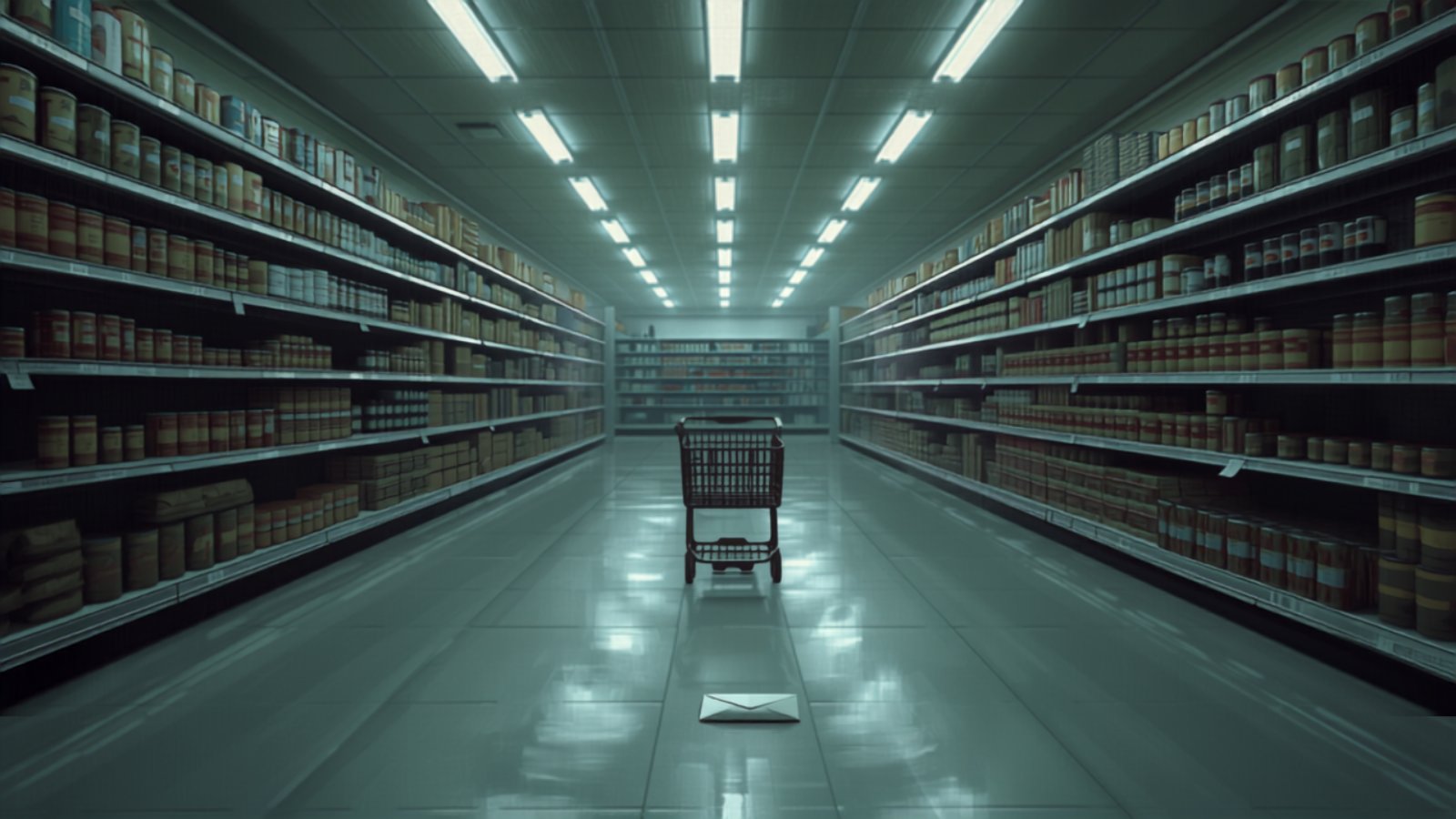
B1 · INTERMEDIATE Reading practice · ~2,850 words · 14-min read
This is an original story for B1 (intermediate) readers. The sentences are a little longer, and the story uses the present perfect tense and the second conditional. First, read the eight key words. Then read the story — it is in six short chapters. At the end, there are questions to check your understanding, and a small writing task.
Before you read — 8 key words
- shift — the hours you are at work in one period, for example seven in the morning to three in the afternoon.
- checkout — the place at the end of a supermarket where you pay for your shopping.
- tip — a small extra amount of money you give to someone who has served you well.
- rent — the money you pay every month for the place where you live.
- tuition — the money you pay for lessons at a university or college.
- envelope — a flat paper cover for a letter or for money.
- honest — telling the truth and never taking things that are not yours.
- charity — an organisation that helps people who need help, usually for free.
The story
1 · Two jobs, one dream
Maya has worked two jobs for the last two years, and she is tired all the time.
From Monday to Friday, she works in a big supermarket in the north of the city. Her shift starts at seven o’clock in the morning and finishes at three in the afternoon. A shift is the hours you are at work in one period. She wears a red uniform and a small name badge that says “Maya — happy to help.” She fills the shelves with tins and packets. She helps old customers reach things from the top shelf. She sits at the checkout — the place at the end of the shop where people pay — and puts their shopping into thin plastic bags.
On Saturday and Sunday, she has another job. She delivers hot food on a heavy old bike. She rides for eight hours a day, in the rain and in the wind. She has learned every small street in her area by heart. Some kind customers give her a tip — a little extra money for good service. Most people, sadly, do not.
Maya is twenty years old. She lives alone in a tiny room in a shared flat. She pays £480 for rent every month. Rent is the money you pay every month for the place where you live. She shares a small kitchen and one bathroom with three other people, and she often has to wait for the shower. But the flat is close to the supermarket, so she saves money on the bus.
Maya has a dream. She wants to study nursing at the university in her city. She has wanted this since she was twelve years old, when her mother was very ill in the hospital. She still remembers the nurses. They were kind, and they were strong, and they made her mum smile again. Maya wants to be a nurse like them.
But nursing school is not free. The tuition for the first year costs £3,200. Tuition is the money you pay for lessons at a university. Maya has been saving for two years, and she has £1,940 in her savings account. It is not enough.
Every night, she sits on her small bed and does the numbers on a piece of paper. If she puts fifty pounds away every week, she will have enough in about a year. If she can put eighty pounds away, she will have it in eight months. But eighty pounds a week is very hard, because her rent is high and food is not cheap.
Her mum lives in another city and works in a school kitchen. She sends Maya a little money when she can, but it is never much.
“If I had more, love, I would send more,” her mum says on the phone. “You know that.”
“I know, Mum,” Maya says softly. “I am fine. I will find a way.”
But some nights, when she is alone in her little room, she cries. The dream feels very far away.
2 · The last customer
It is a cold Friday evening in October. Maya has been at the checkout for eight hours, and her feet are shouting at her. She is thinking about her small bed and a cup of hot tea.
The last customer of the day is an old woman. She is small, with white hair and a bright green coat that looks a little too big for her. She has a kind face. Maya has seen her in the shop before, maybe two or three times.
“Good evening, dear,” the woman says softly. “Are you nearly finished for the day?”
“Yes,” Maya says with a tired smile. “Ten more minutes.”
“You look so tired,” the woman says. “I hope you have a good rest tonight.”
Maya’s smile grows a little wider. It is nice when a stranger notices. “Thank you,” she says. “That is kind of you.”
She scans the shopping — a small brown loaf, milk, apples, some soup, and a little box of tea. The total is £14.80. The old woman pays with cash from a tiny brown purse. She counts the coins carefully, and her hands shake a little.
Then she takes her two shopping bags, thanks Maya again, and walks slowly out of the shop.
Maya turns off the light on her checkout. She takes off her name badge and puts it in her pocket. She is walking towards the staff room when she sees something on the floor near her till.
It is a small paper bag. Brown. Old. It looks like it has fallen out of one of the old woman’s shopping bags.
Maya picks it up. It feels heavier than she expects.
“Excuse me!” she calls out. But the old woman is already gone.
Maya hurries to the front doors of the supermarket. She looks left and right along the wet pavement. There are car lights and rain and a few people with umbrellas — but no green coat anywhere. The old woman has disappeared into the October dark.
“Great,” Maya says quietly. She walks back inside with the little brown bag in her hand.
3 · The envelope
Maya takes the paper bag into the empty staff room and sits down. She is going to give it to her manager, but first she wants to see if there is a name or a phone number inside. She opens the bag.
Inside, there is no shopping. There is only a white envelope. An envelope is a flat paper cover for a letter, and this one has “For the Blue Door” written on the front in careful, old-fashioned handwriting.
Maya looks at the envelope for a moment. It feels strangely thick.
Slowly, she opens it.
Inside, there is money. Not a little money. A lot.
Maya’s hands begin to shake. She counts the notes once. She counts them again. She counts them a third time, because she cannot believe her eyes.
Four hundred and eighty pounds. £480. In old twenty-pound notes.
£480 is the exact amount of her rent for one month. £480 is more than she can save in a whole month, even when she works both jobs and eats only pasta and eggs.
Maya sits very still. Her heart is loud in her ears. She looks at the door of the staff room. She is alone. Nobody has seen the envelope. Nobody in the world knows that it is in her hands.
She thinks of the old woman with the green coat. Will she come back for it? Maybe. But maybe not. The bag was so small and old. Maybe she will think she has dropped it somewhere in the street.
Maya has never stolen anything in her life. Her mother taught her, “If you find something, you give it back. Always.” She has always tried to be an honest person. Honest means telling the truth and never taking things that are not yours.
But tonight, with £480 in her hands, “honest” feels very, very hard.
She has been working for two years now. Two years of tired feet and rainy Sundays on the bike. Two years of cheap food and no holidays. And still her bank account only shows £1,940.
If she kept this money, she would have £2,420. That is not the full tuition, but it is very close. And nobody would ever know.
Maya folds the envelope and puts it back in the paper bag. She puts the bag deep in the inside pocket of her jacket. She does not tell her manager. She does not tell anyone.
She walks home through the cold rain, and her pocket feels heavier than her whole life.
4 · A very long night
Maya cannot sleep.
She sits on her bed with the envelope open in her lap. She has counted the money four more times. It is always the same: four hundred and eighty pounds.
She stands up. She walks to the window and looks at the dark, empty street. She sits down again. She thinks.
If she kept this money, what would she do with it?
First, she would use it to pay her November rent. That would save £480 of her own money. Then she would put that £480 straight into her tuition savings. In just one month, her account would grow to almost £2,500. In six months, she would be ready for nursing school.
If she kept this money, she would be a nurse two years sooner. If she kept this money, her mother would not have to send her anything for a very long time. If she kept this money, she could stop the weekend shift, and she could sleep in on a Saturday morning for the first time in two years.
Maya’s eyes fill with tears. She wants to keep the money so much that it hurts.
But then she thinks of the old woman.
She sees the green coat again. The kind face. The small brown purse. “You look tired, dear. I hope you have a good rest tonight.” A person who says something like that to a stranger, at the end of a long shift — a person like that does not have money to lose. And the note on the envelope, “For the Blue Door” — someone had written it slowly, carefully. It clearly meant something important.
If Maya keeps the money, someone else will not have their rent, or their food, or their heating.
And if she keeps the money, she will not be an honest person any more. Every time she puts on a nurse’s uniform in the future, she will remember the night she took an old woman’s envelope. Every single day, she will remember.
She thinks of her mum. Her mum, who sends her twenty pounds when she can. Her mum, who has cleaned school kitchens for thirty long years and who has never taken anything that was not hers. If her mum knew about this envelope, what would she say?
Maya knows exactly what her mum would say.
She lies down and closes her eyes. She still holds the envelope in her hand.
“In the morning,” she whispers to herself, “I will find her.”
5 · The blue door
On Saturday morning, Maya does not go to work. She calls the delivery company and tells them she is ill. It is the first time she has done that in two years, and she feels bad. But finding the old woman is more important than one shift on the bike.
She goes straight to the supermarket. She asks her manager if any customer has phoned or come in about a lost bag. No, he tells her. Nobody at all.
Maya has one small idea. The old woman lives near the shop, because she walked in and out with heavy bags. And the note on the envelope had said “For the Blue Door.” Maybe there is a place with that name somewhere close.
She takes out her phone. She types: “Blue Door” and the name of her area.
Something appears at the top of the results. “The Blue Door — a small charity that supports young women leaving the care system. Open Tuesday, Thursday and Saturday, 10am to 3pm.”
Charity. A charity is an organisation that helps people who need help.
Maya reads a little more. The Blue Door helps young women who have grown up in care — girls who have no family to help them — to find work, get training, and pay for study. The address is only fifteen minutes’ walk from her flat.
Maya’s heart beats hard. She takes the envelope out of her drawer. She puts on her jacket. She walks.
The Blue Door is a small terraced building on a quiet street. The front door is painted a wonderful bright blue, and above it, in white letters, it says “The Blue Door — since 1998.”
Maya knocks.
A young woman opens the door. She is wearing a soft grey jumper and holding a mug of tea.
“Hello — can I help you?” she asks kindly.
“I am looking for an old lady in a green coat,” Maya says. “She came to the supermarket where I work last night. I think… I think this envelope is for you, or for her.”
She holds out the envelope with a shaking hand.
The young woman’s mouth opens.
“Oh! Oh, please come in, come in. She is here — she is upstairs having a cup of tea with our director. She has been so upset all morning. She thought she had lost it in the street.”
6 · A different kind of offer
Maya is taken into a small, warm room. It has two comfortable armchairs, a low wooden table, and a green plant by the window. The young woman brings her a mug of tea and disappears.
A moment later, the old lady comes slowly down the stairs. She is still in the green coat. When she sees Maya sitting there with the envelope on the table, her hand goes straight to her mouth.
“You,” she says. “The girl from the supermarket.”
“Yes,” Maya says softly. “You dropped this.”
The old woman sits down in the other armchair. She stares at the envelope for a moment. Then she looks at Maya, and her eyes fill with tears.
“My name is Enid Harper,” she says. “Thank you, my dear. You do not know what this means.”
For a moment, nobody speaks. Then Mrs Harper takes a slow breath.
“That money,” she says, “is for the Blue Door. Every single month, for many years, I have brought them the same amount. £480. It pays the rent on this house. This is the house where young women who have nowhere else to go can come, and be safe, and get real help.”
She looks around the small warm room.
“For thirty years, I have been walking here with an envelope in my bag. Do you know why? Because a very long time ago, when I was seventeen years old and had nobody in the world, another old woman helped me. She paid for my first year at college. She said one thing to me — she said, ‘Enid, when you can, you will help someone else.'”
Mrs Harper smiles a little.
“I have kept my promise. But I am seventy-nine years old now. And last night, when I got home and could not find the envelope, I felt so ill I nearly called the doctor. I thought — ‘This month, the girls will not have their house.'”
“I understand,” Maya says quietly.
Mrs Harper looks at her carefully. “And now, may I ask you something? You look so young, and so tired. Why are you working so hard?”
Maya tells her. Her voice is quiet at first, then a little braver. She tells her about the supermarket and the bike. About her mother in the school kitchen. About the nursing school and the £3,200 and the two long years of saving. She has never told the whole story to anyone before.
Mrs Harper listens without saying a word. When Maya finally stops, the old woman is silent for a long moment.
Then she says something that surprises Maya more than anything in her life.
“You are the young woman I have been waiting for,” she says.
Maya blinks. “I… I do not understand.”
Mrs Harper leans forward. “For six months, I have been looking for someone kind and honest to help me here at the Blue Door. Two days a week. Simple work — helping the girls with their forms, making them tea, listening to their stories. The pay is fifteen pounds an hour. That is better than the bike, I think.”
Maya cannot speak for a moment. Fifteen pounds an hour. Two days a week. That is already more than the delivery job pays her in a whole weekend. And she could sleep in on Sunday morning.
“But,” Mrs Harper says gently, “there is one more thing. And this is the important part.”
She reaches across the table and takes Maya’s hand. Her fingers are warm and thin.
“Would you sit with me for a little longer? Because there is a special fund at the Blue Door — a fund for young women exactly like you. And I think, my dear, that you might be exactly the person it was created for.”
Outside, the October sun breaks through the clouds for the first time in a week. A thin line of gold falls across the wooden floor.
Maya holds tight to the old woman’s hand.
And, for the first time in a very long time, she waits with a smile on her face.
Check your understanding
Read each question. Think about your answer. Then click “Show answer” to check.
Words to remember
Here are the eight key words again, in new sentences. Say each one out loud.
- shift — My brother works an early shift at the hospital, from six until two.
- checkout — There was a long queue at the checkout, so I waited fifteen minutes.
- tip — If the waiter has been very kind, we usually leave a small tip.
- rent — If I found a better job, I would pay my rent more easily.
- tuition — She has saved enough for the first year of tuition, but not for the second.
- envelope — He wrote her name on a small brown envelope and posted it that afternoon.
- honest — An honest worker always tells the manager the truth, even when it is difficult.
- charity — This charity has been helping local families since 1998.
Grammar in this story: the second conditional
This story uses the second conditional many times. We use the second conditional to talk about a situation that is not real now, but that we can imagine. The pattern is:
If + past simple, would + verb.
Look at these examples from the story:
“If she kept this money, she would be a nurse two years sooner.”
“If she kept this money, her mother would not have to send her anything.”
“If I had more, love, I would send more.”
In all these sentences, the “if” part is not real. Maya has not kept the money, and her mum does not have more. But we can imagine what would happen if the situation were different.
Try it now: complete this imaginary situation. If I ___ (have) more free time, I ___ (learn) another language. Check your answer: If I had more free time, I would learn another language. Now write one second-conditional sentence about your own dream.
Talk about it · Write about it
Talk about it: If you found £480 in a stranger’s lost bag, what would you do? Would it be an easy choice or a hard one? Why?
Write about it: Write a short paragraph (6–8 sentences) about a dream that costs money. What is your dream? How much does it cost? What are you doing to save for it? Use at least two second-conditional sentences (for example, “If I had more time, I would…”).
🎉 Well done — you have finished a full B1 story! Did you notice how much of the second conditional you understood? Your English is stronger than you think.
But we still do not know exactly what Mrs Harper wants to tell Maya about the special fund. How much is it? Will it change Maya’s life? Write your own ending, using details from the story to explain your choice.
Amina takes the same bus to work each morning. Follow the book and notice how it changes an ordinary journey. Next story: The Book on the Train (B1 Reading Story)
About this story: This is an original B1 (intermediate) graded reader of about 2,850 words. The vocabulary is kept inside the B1 range (around 1,000 headwords), and the story features the present perfect, the second conditional, and simple relative clauses. Any harder word is glossed at the top and reused inside the story, so a B1 reader can comfortably understand about 98% of the running words.

I’m Khamis Maiouf. I’m studying Health and Social Care and have completed Functional Skills Level 2 in English and Level 3 Hairdressing. I have taught ESOL in my community and helped students with GCSE English. I run English Teacher Site to help people learn and practise English.