
The Wrong Suitcase in Zagreb (B1 Reading Story)

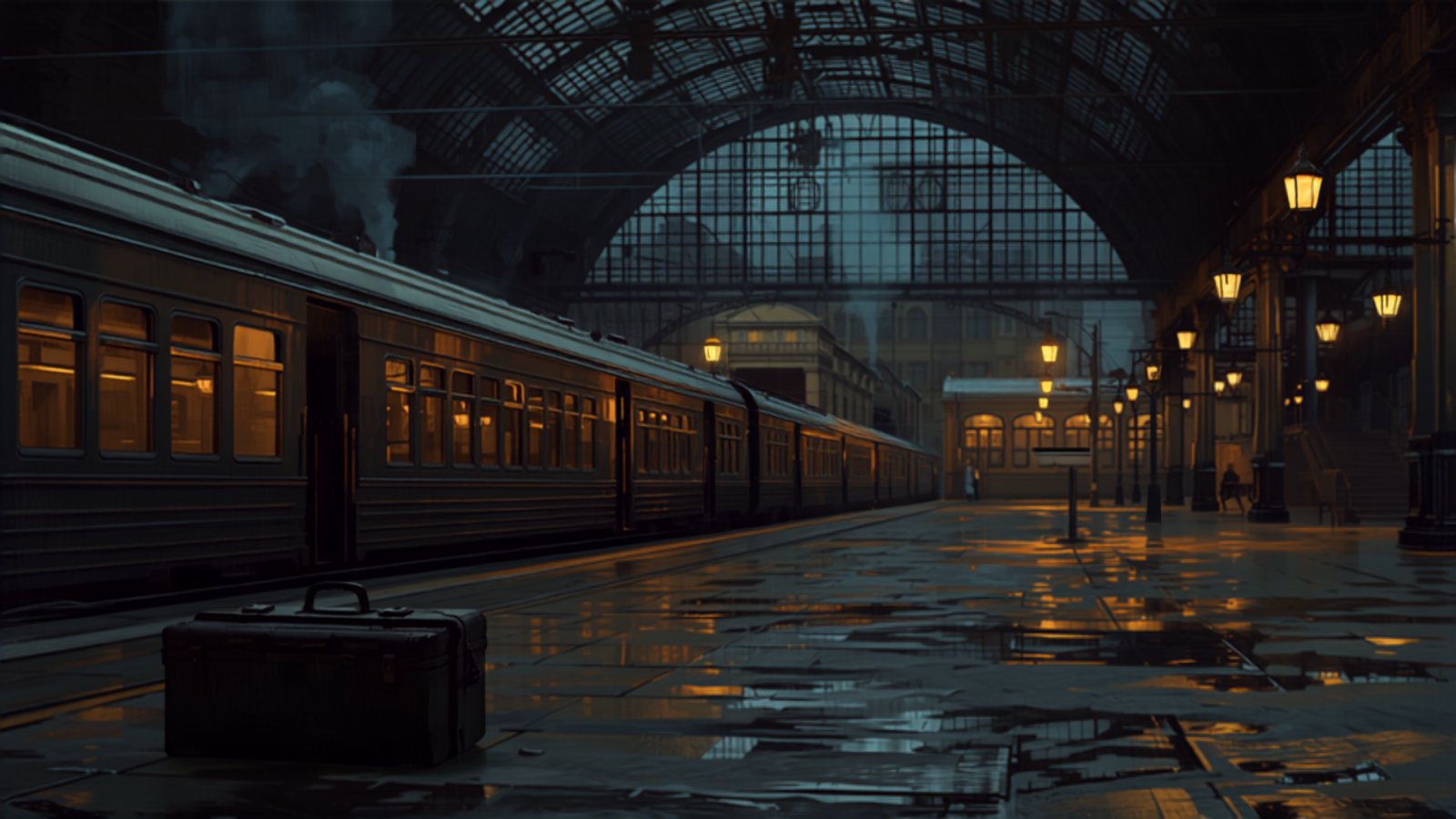
B1 · INTERMEDIATE Reading practice · ~2,800 words · 18-min read
This is an original B1 story for intermediate learners. It uses the present perfect, past simple, and first and second conditionals. First, read the ten key words. Then read the story — it is in seven short chapters. At the end, there is a small quiz to check what you understand.
Before you read — 10 key words
- platform — the part of a train station where you stand and get on the train.
- label — a small piece of paper on a bag, with a name or an address on it.
- journal — a private book where you write about your days and your thoughts.
- handwritten — written by hand with a pen, not printed by a computer.
- stationmaster — the person who is in charge of a train station.
- taxi rank — the place outside a station where taxis wait for customers.
- tram — a small train that runs on rails in a city street.
- stranger — a person you do not know.
- reunion — a happy meeting between people who have not seen each other for a long time.
- flat — a home inside a bigger building (in American English: an apartment).
The story
1 · Home is a strange country
The train from Vienna arrived in Zagreb at ten to seven in the evening. Ana had been travelling since early morning, and she was very tired. She stood by the door with her suitcase in her hand, watching the yellow lights of the station move past the window.
Ana had lived in Vienna for two years. She had worked in a small hotel, cleaned rooms, and learned enough German to talk to the guests about the weather. Now she was coming home. Her grandmother was ill, and Ana was the only family she had left in the world.
The train stopped at platform six. The doors opened, and hot summer air came in. Ana stepped down onto the platform with the other passengers. Her suitcase was heavy — she had put everything from her small Viennese flat inside it. Two years of a life in one black suitcase.
“Home,” she said quietly. But home did not feel like home. It felt like a strange country. Ana had been away for two years, and the city had changed. She had changed too.
She walked towards the exit. She was thinking about her grandmother. She was thinking about the small yellow house in the north of the city, and the garden, and the tomato plants that her grandmother had grown every summer for forty years.
She was not thinking about her suitcase. That was her first mistake.
2 · The mistake at platform six
The station was full of people. A group of tourists with big backpacks was blocking the middle of the platform. A father was calling for his little son. A woman in a red coat was crying into her phone.
Ana pushed through the crowd. Her suitcase felt heavier than before. She reached the taxi rank outside the station and stopped to catch her breath. The taxi rank is the place where taxis wait for customers, and tonight the line of yellow cars was long.
“Zagreb,” she said to herself. “I have come home.”
She opened her suitcase to find her keys. Her grandmother had sent them in the post six months ago, and Ana had kept them in a small front pocket.
But when she opened the suitcase, she did not see her clothes. She saw a soft blue jumper that was not hers. She saw a pair of old shoes that were not hers. And on top of everything, she saw a small brown book. It looked like a journal — the private kind, where a person writes about their days.
Ana’s heart stopped.
She looked at the label on the outside of the suitcase. A label is a small piece of paper with a name or an address on it. The name on this label was not hers.
The name was: VERA HORVAT — 14, ULICA JELAČIĆ — ZAGREB.
Ana had taken the wrong suitcase.
She turned around and ran back into the station. She pushed past the tourists. She jumped over a small dog on a lead. She reached platform six, breathing hard.
The train had gone.
3 · The journal
Ana sat down on a wooden bench and put her head in her hands. Her own suitcase — with all her clothes, her documents, her passport, and her grandmother’s yellow-house keys — was now on a train to who-knows-where. It had been in her hand ten minutes ago. Now it was gone.
She looked at the wrong suitcase on the seat next to her. It was almost the same as hers — black, big, with silver corners. But it belonged to a woman called Vera Horvat, who was a complete stranger. A stranger is a person you do not know.
Ana opened the suitcase again. She lifted out the blue jumper. Under the jumper, she found the small brown book. It was old. The cover was soft, like leather that many hands had touched over many years.
She opened the journal. On the first page, in beautiful handwritten letters — handwritten means written by hand, not printed — she read:
“This is the journal of Vera Horvat. I have kept it since I was nineteen years old. It is now 1985, and I have started a new book because the old one is full.”
Ana felt like a thief. This was a stranger’s journal — the private writing of a woman she had never met. She should close it and give it back.
But she did not close it. She turned to the last page.
The last entry had been written that morning. The date was today. The handwriting was shaky, as if the writer’s hand had been shaking when she wrote.
“Today is the day. I am going to Split. If I find her, I will not have to write in this book any more. If I do not find her, I will come home and put this book in the fire. I have looked for my sister for forty years. This is my last try.”
Ana read the words again. Then she read them a third time.
A sister. A journey. Forty years.
Ana closed the journal quietly. She had taken more than a suitcase from platform six. She had taken a stranger’s whole life.
4 · A choice
Ana ran to the office of the stationmaster, who was a large man with a kind face and thick grey hair. The stationmaster is the person who is in charge of the whole station. She explained everything in a rush of words.
“Right, right, slow down,” the stationmaster said. “You have taken the wrong bag. It happens more often than people think. The train you came on — where is it going next?”
“It goes to Rijeka,” Ana said. “And then to Split, on the coast.”
The stationmaster looked at his computer. “Right. I can call ahead. If someone finds your bag, they will keep it for you. But your bag might travel a long way before that happens. It might take a few days.”
“And Vera Horvat?” Ana asked. “The owner of this bag? Has she come here to the office?”
“Nobody has been here about a lost bag. But it is only twenty minutes. She might be at the taxi rank now, looking for it and worrying.”
Ana thought fast. She had a choice. She could stay at the station and wait for her own suitcase to come back. That could take days. It could take a week. Or she could take Vera’s suitcase to the address on the label — 14, Ulica Jelačić — and try to find the woman who owned it.
If Vera had already left for Split, Ana would give the suitcase to Vera’s family. If Vera had not yet gone, Ana would give the bag back to her before she got on the wrong train, or before she travelled to Split without the one thing that had guided her heart for forty years — her journal.
“I will go to her flat,” Ana said. “If she is there, I will give the suitcase to her myself.”
The stationmaster smiled slowly. “You are a good person,” he said. “Not many people would do that. Most people would only think about their own bag. If I were you, I would think about my own bag first too.”
Ana was not sure if she was a good person. She was thinking about her passport, about her grandmother’s yellow house, and about the tomato plants that had waited for her all summer. She was thinking that her own life was now on a train she could not stop.
But she was also thinking about the shaky handwriting. About a sister who had been lost for forty years. About a fire in which a whole life might soon burn.
She picked up the wrong suitcase and walked out of the station.
5 · The old café
Ana did not know the street called Ulica Jelačić, so she asked a woman at the taxi rank.
“Ulica Jelačić? That is in the old part of the city,” the woman said. “It is easier to take the tram. Number thirteen. Ten minutes.”
A tram is a small train that runs on rails in the city street. Ana had not been on a Zagreb tram for two years. She sat by the window with the heavy suitcase between her knees. The tram was crowded. A boy was eating a chocolate ice cream. Two old men were arguing about football in loud, happy voices.
Outside the window, the city moved past. Ana saw old churches she remembered from her childhood. She saw new shops that had opened while she had been away. Zagreb had gone on living without her. It had not waited.
At the fifth stop, Ana got off. The old part of the city was quiet. The buildings were tall and yellow, with tired green windows. Ana walked slowly, reading the street signs. Ulica Jelačić. Number 14.
The building was very old. There were four flats inside. Ana looked at the names by the doorbells. On the second floor: V. HORVAT.
Ana rang the bell. Nothing happened. She rang it again. She waited for a full minute. Nobody came.
An old woman came out of the ground-floor flat. She was small and thin, with white hair and a bright pink dress.
“Vera?” the woman said. “Are you looking for Vera? She has gone to the train station this morning.”
“Yes,” Ana said. “I know. She… she has forgotten something.”
The old woman looked at the suitcase in Ana’s hand and understood at once. Her eyes became wet.
“That is Vera’s bag,” she said quietly. “Come with me. There is a small café on the corner where Vera drinks her morning coffee. The woman who owns it has known Vera for thirty years. She will know where Vera has really gone.”
They walked together to the café. It was a tiny place with red doors and yellow flowers in the window. Inside, a woman was cleaning glasses behind the bar.
“Anka,” said the old woman in pink, “this young lady has brought Vera’s suitcase back.”
Anka put down the glass. She dried her hands on a white cloth. Then she said something Ana did not expect.
“Vera has not gone to Split,” Anka said. “She has gone to the airport.”
6 · A door that hasn’t opened in forty years
“The airport?” Ana said. “But her journal — the journal in the suitcase — it says Split.”
Anka smiled a little, sadly. “Vera has been planning this trip for a long time. She has not wanted to tell anyone the real place. She has always said ‘Split’ when people ask, because Split is close, and if she does not go, nobody will know she has failed. But her sister does not live in Split.”
“Where does her sister live?” Ana asked.
“Australia,” Anka said.
Ana sat down. She had been standing since the train had stopped. Her legs were tired.
“Vera has not seen her sister Marija since 1985,” Anka said. “They fought about something stupid — a boy, a small piece of land, one of those old family fights. Marija left the country and did not come back. Vera has written her a letter every month for forty years, but Marija has never written back. Not once. Then, last month, a letter came. From Sydney. From Marija. Only three lines. It said: ‘I am ill. If you want to see me, come now. I have been waiting a long time to say I am sorry.’“
Ana thought about the shaky handwriting in the journal. If I find her, I will not have to write in this book any more.
“So Vera is at the airport now?” Ana said.
“Her plane leaves at nine o’clock,” Anka said. “She has her money, and she has her ticket. But her passport — her passport is in that suitcase. Every important thing she owns is in that suitcase.”
Ana looked at the big round clock on the café wall. It was quarter past seven. The airport was thirty minutes away by car, maybe forty in the evening traffic. She had one hour and a half.
“Please, call me a taxi,” Ana said. “Now.”
The old woman in the pink dress touched Ana’s arm gently. “You do not know Vera,” she said. “Why are you doing this?”
Ana looked at the suitcase between her feet. She thought about her own suitcase, on a train, moving further from her every minute. She thought about her grandmother’s yellow house and the tomato plants that were waiting.
“Because if I do not do it,” she said slowly, “a door that has not opened in forty years will stay closed. And I could not live with that.”
Anka picked up the phone. Two minutes later, the taxi came.
7 · The last flight
The traffic was bad. Ana sat in the back of the taxi, watching the clock and reading the journal on her lap. She should not have opened it. It was not hers to read. But she wanted to know Vera. If she was going to hand a suitcase to a stranger in the middle of an airport, she wanted to know who that stranger was.
Vera had written about small things. The taste of her mother’s Sunday soup. The colour of the sky on a winter morning. The face of her sister Marija when they were both young and could not stop laughing. Vera had loved her sister very, very much.
The taxi arrived at the airport at ten to nine. Ana ran through the sliding doors with the heavy suitcase in both hands. She looked up at the big board on the wall. The flight to Sydney was closing.
She ran to the check-in desk. “Vera Horvat!” she called. “I am looking for a passenger called Vera Horvat! She is going to Sydney!”
A young man behind the desk looked up. “The Sydney flight has closed for check-in. Any passenger has already gone through to the gate.”
“No, no, please,” Ana said. “She has forgotten her passport. She cannot fly without it. Please, you must find her before the door closes.”
The young man made a fast call. He spoke in quick Croatian. Then he said, “Wait here. Do not move.”
Two long minutes later, a small woman came running towards Ana across the empty hall. She had short white hair and round glasses. Her face was white as paper. Her hands were empty.
“My suitcase,” she whispered. “Where —”
She stopped. She looked at Ana. She looked at the black suitcase in Ana’s hand.
“Vera?” Ana said quietly.
Vera did not speak. She could not. Her eyes were full of tears. She sat down on the cold airport floor, right there in front of the desk, and she cried without a sound.
Ana sat down next to her. She did not know what to do. She put the suitcase between them like a small bridge.
“Your journal is inside,” she said softly. “I did not close it. I am sorry. I read some of it — only some. I am so sorry.”
Vera lifted her head. She looked at Ana for a long time. Then she smiled — a small, tired smile, but a real one.
“You have brought me my whole life back,” she said.
Ana helped her up. She helped her to the gate. The young man from the desk was already there, waiting. He took Vera’s passport from inside the journal, checked it, and opened a small side door with a plastic card.
Vera turned to Ana at the last moment. She looked at Ana’s face for a long time, as if she were trying to remember every line.
“Come with me,” Vera said.
Ana laughed, but Vera was not joking.
“There is a seat next to me,” Vera said. “I have paid for two. My sister sent me the money for two, in case I found someone brave enough to come. Do you want to be there for a reunion? Do you want to meet a woman I have not seen for forty years?”
A reunion, Ana thought. A happy meeting between people who have been apart for a long time.
Behind Vera, the door was open. In front of her, an old woman with a suitcase full of a whole life was waiting for an answer.
Ana thought about her own suitcase, still on a train somewhere near the coast. She thought about her grandmother, and the yellow house, and the tomato plants.
And she thought — for the first time all day — about the small brown journal, and how a person can look for someone for forty years, and how she herself had never yet looked for anything for even one.
She looked at Vera. She opened her mouth to answer.
Check your understanding
Read each question. Think about your answer. Then click “Show answer” to check.
Words to remember
Here are the ten key words again, in fresh sentences. Say each one out loud, and try to make one more sentence of your own.
- platform — My train leaves from platform three in five minutes.
- label — Always put a label with your name on your bag before you travel.
- journal — She has kept a journal since she was a teenager.
- handwritten — He gave me a beautiful handwritten letter for my birthday.
- stationmaster — Ask the stationmaster if you lose something on the train.
- taxi rank — You will find a taxi rank just outside the airport.
- tram — In Zagreb, the number thirteen tram goes to the old town.
- stranger — I never take a lift home from a stranger.
- reunion — Our family reunion is in the garden this Sunday.
- flat — She lives in a small flat on the second floor.
Grammar in this story: the present perfect
This story uses the present perfect tense many times. We use it to talk about something that started in the past and is still important now — often with words like for, since, never, or already. Look at these sentences from the story:
Vera has looked for her sister for forty years. Ana has lived in Vienna for two years. Marija has never written back. “I have kept this journal since I was nineteen.”
The pattern is: have / has + past participle (looked, lived, written, kept). We use has with he, she, and it, and have with everything else.
👉 Learn the full rule here: Understanding the Present Perfect Tense →
Talk about it · Write about it
Talk about it: Have you ever lost something important when you were travelling? What happened? Or — if you were Ana, what would you have done at the airport gate: get on the plane, or go home to your grandmother?
Write about it: Write a short paragraph (8–10 sentences) about a person you have not seen for a long time. Who are they? How long has it been? What would you say if you met them again tomorrow? Try to use the present perfect three times.
🎉 Well done — you have read a full B1 story in English. That is nearly three thousand words of controlled English, and you have met the present perfect at work in a real story, not just in a grammar list.
But wait — did Ana get on the plane, or did she go home to her grandmother? And what happened to her own suitcase, still on a train to Split? Write your own ending, using details from the story to explain your choice.
Amira has planned her first solo trip carefully. Read about the paper map and follow what happens when the plan changes. Next story: The Paper Map (B1 Reading Story)
About this story: This is an original B1 graded reader (~2,800 words) written for intermediate learners. It follows the Oxford Bookworms method: vocabulary is kept around the 1,000 most common English headwords, and any harder word is explained before the story and used again inside it. The grammar sits in the B1 zone — present perfect, past simple and continuous, relative clauses, and the first and second conditionals — so you can meet real intermediate English at ~98% comprehension.

I’m Khamis Maiouf. I’m studying Health and Social Care and have completed Functional Skills Level 2 in English and Level 3 Hairdressing. I have taught ESOL in my community and helped students with GCSE English. I run English Teacher Site to help people learn and practise English.