
The Chess Tables in the Park (A2 Reading Story)

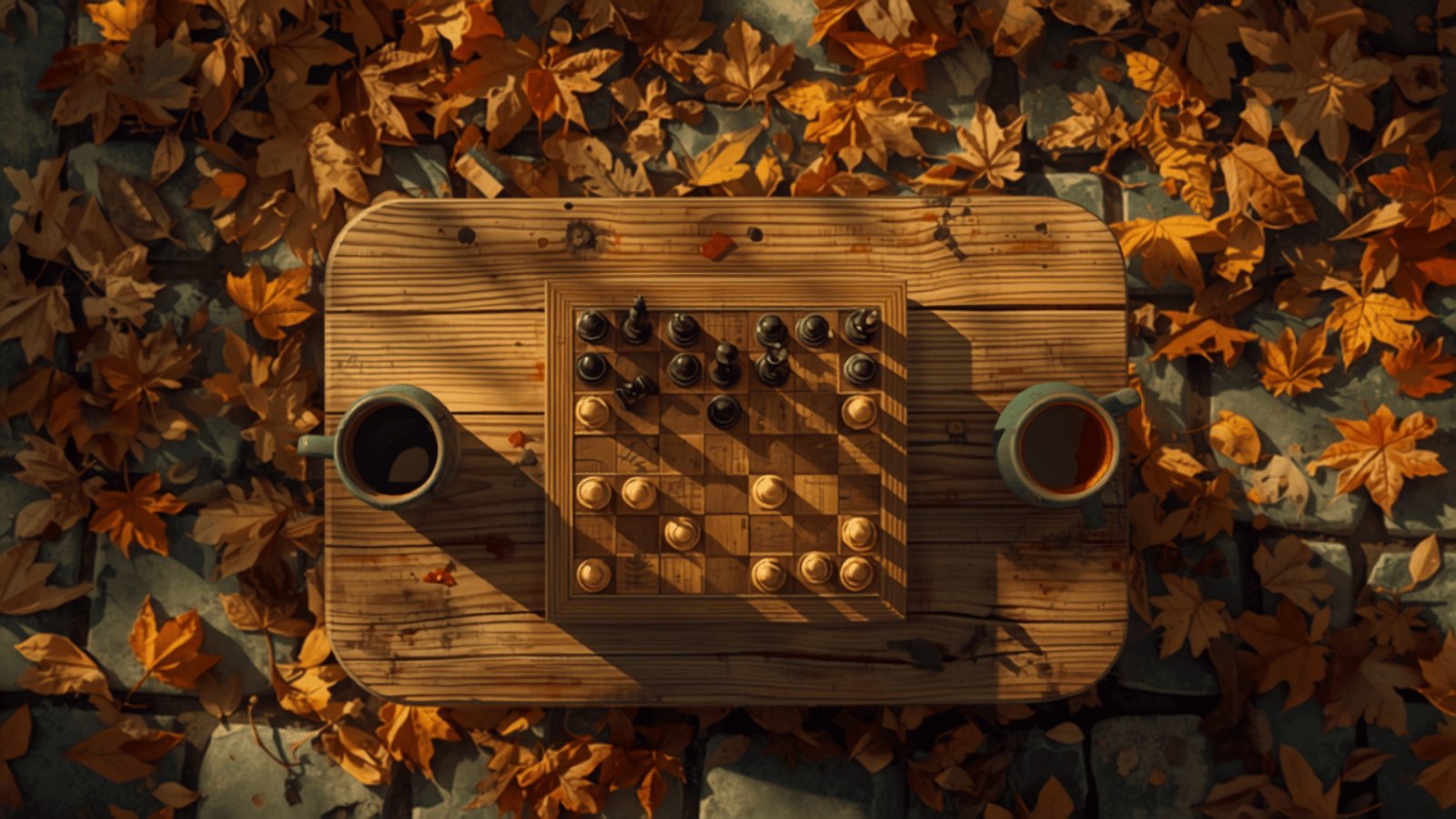
A2 · ELEMENTARY Reading practice · ~1,600 words · 10-min read
This is a story about friendship for elementary learners. It uses the past simple tense and short, clear sentences. First, read the eight key words. Then read the story. At the end, there is a small quiz to check what you understand.
Before you read — 8 key words
- chess — a game for two players on a black-and-white board.
- move — in a game, when you change the place of one piece.
- lonely — sad because you are alone and have no friends near you.
- council — the group of people who manage a town or city.
- notice — a piece of paper on a wall that gives information to everybody.
- signature — your name, written by you, to show that you agree.
- tournament — a big competition with many games and many players.
- proud — happy because you (or your friend) did something well.
The story
1 · The girl with no friends
Dana was twelve years old. In September, she moved to a big city with her mother. Her mother found a new job there, so they packed their bags and left their small town by the sea.
The new flat was fine. The new school was fine. But Dana was not fine. She was lonely. Lonely means sad because you are alone. At lunch, she sat by herself and ate her sandwich slowly. The other students already had their friends. They laughed together at their own tables. Nobody was unkind to Dana, but nobody talked to her either.
“How was school?” her mother asked every evening.
“Fine,” Dana said. But it was not true, and her mother knew it.
After school, Dana did not want to go straight home to the empty flat. So she walked through the park. The park was old and beautiful. It had tall trees, a small lake with ducks, and a corner with four stone tables. Chess boards were painted on the tops of the tables in black and white squares.
One cold Saturday in October, Dana saw an old man at one of the stone tables. He wore a long brown coat and a red scarf. On the table in front of him stood the pieces of a chess game — but there was no other player. He played alone. He made a move with a white piece, then he walked to the other side of the table and made a move with a black piece.
Dana stopped and watched. She knew a little chess. Her grandfather taught her the moves many years ago, before he died.
The old man looked up. His eyes were grey and friendly.
“You watched me for ten minutes,” he said. “Do you play chess?”
“A little,” Dana said. “But not well.”
“Perfect,” the man smiled. “I am Mr Petrov. Sit down. Black or white?”
Dana sat down on the cold stone seat. She chose white. She lost the game in fifteen minutes. But for the first time in six weeks, she did not feel lonely.
2 · Saturdays at the stone tables
After that day, Dana went to the park every Saturday morning. Mr Petrov was always there, at the same stone table, with his red scarf and a small bag of bread for the ducks.
He was a good teacher. He did not get angry when Dana made a bad move. He just said, “Interesting choice. Now look at the board again. What does my knight want to do?” Then Dana looked, and slowly she saw the danger.
Mr Petrov told her stories, too. Fifty years ago, in another country, he played in a big tournament. A tournament is a competition with many players. He won a small silver cup. “I was young and I had a lot of hair,” he laughed. “Now I have no hair, but I still have the cup.”
Dana learned that Mr Petrov lived alone. His wife died three years ago, and his son lived far away in Canada. The stone tables were important to him. “When I sit here,” he said, “people come and play, and I am not alone. A chess table is a small thing, but it makes friends from strangers.”
It was true. Other people came to the tables on Saturdays. There was Amir, a taxi driver who played fast and drank tea from a big silver flask. There was Rosa, a nurse who came after her night shift and still won most of her games. They all knew Mr Petrov. Soon they knew Dana, too.
“Good morning, champion,” Amir said to her every week. It was a joke, because Dana lost almost every game. But she got better. She stopped losing in fifteen minutes. She started losing in forty minutes. Then, one grey morning in November, she did not lose at all.
She looked at the board. She looked again. “Mr Petrov,” she said quietly, “I think that is checkmate.”
Mr Petrov studied the board for a long minute. Then he laid his king down on its side and laughed a big, warm laugh. “It is!” he said. “Rosa! Amir! Come and see! The student beat the teacher!”
Dana’s face went red, but her heart was warm. Mr Petrov was not angry. He was proud. Proud means happy because someone did something well. That evening, Dana told her mother everything — about Mr Petrov, about Amir and Rosa, about the win. Her mother listened and smiled. It was the longest talk they had in months.
3 · The notice on the gate
One Saturday in March, Dana ran to the park with good news. She wanted to tell Mr Petrov about her maths test. But when she arrived, nobody was playing. Mr Petrov, Amir and Rosa stood together at the park gate. They looked at a white piece of paper on the wall.
It was a notice from the city council. Dana read it twice.
The council wanted to take away the four stone tables. They planned to build a new coffee kiosk in that corner of the park. The work was going to start in eight weeks.
“They cannot do this,” Amir said angrily.
“They can,” Rosa said. “It is their park.”
Mr Petrov said nothing. He looked very old and very tired. Then he walked slowly back to his table and touched the painted squares with his hand.
Dana felt something hot inside her chest. This corner of the park gave her friends when she had nobody. She was not going to lose it without a fight.
“We will stop them,” she said. Everybody looked at her — the quiet girl who never talked first. “The notice says people can write to the council before the fifteenth of April. So we will collect signatures. A signature is a name that says I agree. If hundreds of people sign, the council will listen. And we will do something more. We will hold a Chess Day in the park, so everybody can see how special these tables are.”
There was a small silence. Then Amir laughed his big laugh. “Good morning, champion,” he said — and this time it was not a joke.
The next week was the hardest. Dana needed help, and that meant one thing: she needed to talk to the students at school. On Monday, at lunch, she took her tray and walked to the biggest table. Her hands were cold. Her heart went boom, boom, boom.
“Hi,” she said. “I am Dana. I need help to save something.”
She told them about Mr Petrov, the stone tables, and the plan. And a strange thing happened. They did not laugh at her. A tall boy called Leo said his grandmother played chess. A girl called Mia said she could make posters, because she loved art. Two brothers, Sam and Alex, said they were going to ask every shop on the high street to put a signature sheet next to the till.
By Friday, they were not “the students at school” any more. They were Dana’s team.
4 · Chess Day
Chess Day came on a bright Saturday in April. Mia’s posters were everywhere in town: SAVE OUR CHESS TABLES — COME AND PLAY!
Dana arrived at nine o’clock. She could not believe her eyes. The corner of the park was full. Amir brought twenty plastic chairs in his taxi. Rosa brought three boxes of cakes from the nurses at the hospital. Leo’s grandmother sat at a stone table and beat four different men before lunch. Little children played their first games with pieces as big as their hands. Somebody played music. The ducks watched from the lake and hoped for bread.
And at the middle table sat Mr Petrov, in his red scarf, with his old silver cup in front of him. He played game after game, and between the games he told stories, and people stood around him and listened.
At two o’clock, a young woman with a camera came. She was from the local newspaper. She took a photo of Mr Petrov and Dana over a chess board. “Who started all this?” she asked.
Mr Petrov put his hand on Dana’s shoulder. “My friend did,” he said. “Six months ago she watched me play for ten minutes. Best ten minutes of my week, that was.”
By five o’clock, the signature sheets were heavy. Sam and Alex counted them at the stone table: four hundred and twelve signatures. On Monday, Dana and her mother took them to the council office and gave them to a serious man behind a glass window.
Two weeks later, a new notice appeared on the park gate. The council changed its plan. The kiosk was going to stand near the lake instead — and the council was going to clean the four old tables and add two new ones, “because of strong public interest”.
That Saturday, the friends met at the tables: Mr Petrov, Amir, Rosa, Leo, Mia, Sam, Alex, and Dana. Rosa read the notice out loud, and everybody cheered so loudly that the ducks flew off the lake.
“I am proud of you, Dana,” Mr Petrov said quietly. “Your grandfather taught you the moves. But you taught yourself the most important thing — how to bring people together.”
Then he took an envelope from his coat pocket and put it on the board, between the kings.
“This came for you,” he said. “I wrote to some old friends about a very good young player. There is a junior tournament in this city in June. The question is — are you going to play?”
Dana looked at the envelope. Then she looked at her friends. Everybody waited for her answer.
Check your understanding
Read each question. Think about your answer. Then click “Show answer” to check.
Words to remember
Here are the key words again, in new sentences. Say each one out loud.
- chess — My brother and I played chess all evening, and I won two games.
- move — Think carefully before you make your next move.
- lonely — He felt lonely in the new town, so he joined a football club.
- council — The city council built a new playground last year.
- notice — I read a notice on the door: “The library will close at 3 p.m. today.”
- signature — Please write your signature at the bottom of the form.
- tournament — Sixty-four players came to the table-tennis tournament.
- proud — My mother was proud of me when I passed the exam.
Grammar in this story: irregular verbs in the past simple
This story is about the past, so it uses the past simple tense. Many of its most useful verbs are irregular — they do not take -ed. Look:
Dana went to the park every Saturday (go → went). Mr Petrov told her stories (tell → told). She lost the first game (lose → lost) — but in November she won (win → won).
Regular verbs are easy: walk → walked, play → played. Irregular verbs you must learn one by one — and reading stories is the nicest way to do it.
👉 Learn the full rule here: What Are Regular and Irregular Verbs?
Talk about it · Write about it
Talk about it: Dana made friends with a person who was much older than her. Can old people and young people be good friends? Do you know a friendship like this?
Write about it: Write 6–8 sentences about a time when you were new somewhere — a new school, a new job, or a new town. How did you feel? Who talked to you first? Use the past simple.
🎉 Well done — you finished a whole story in English! Did you notice how many irregular past verbs you understood? That is real progress.
But one question stays open: the envelope is on the board, and everybody is waiting. Is Dana going to play in the junior tournament in June? What happens next? Write your own ending in five short sentences.
Sam and Leo have been friends for years. Read about the blue guitar and explain the choices they make. Next story: The Blue Guitar (A2 Reading Story)
About this story: This is an original A2 graded reader (~1,600 words). It follows the graded-reader method: controlled elementary vocabulary, past simple grammar with basic connectors, and a plot built from everyday life. Any harder word is explained before the story and used again inside it, so you can understand about 98% of the words you read.

I’m Khamis Maiouf. I’m studying Health and Social Care and have completed Functional Skills Level 2 in English and Level 3 Hairdressing. I have taught ESOL in my community and helped students with GCSE English. I run English Teacher Site to help people learn and practise English.