Is It Bended or Bent: How to Use the Past Tense of Bend Like a Pro?

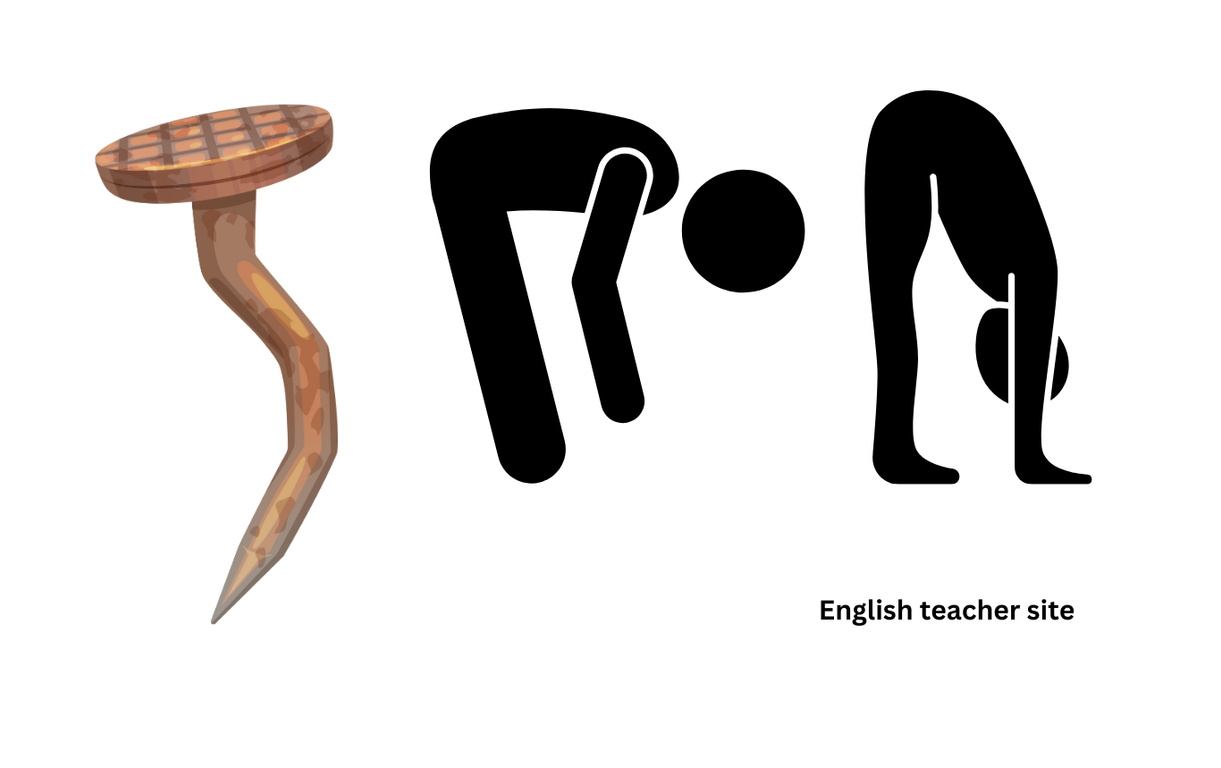
Quick Answer
The past tense of bend is bent. It is the same with “have,” “has,” or “had” — always bent.
Every day: I bend my knees when I exercise.
Yesterday: I bent the wire.
Many times: I have bent this spoon before.
Bend and Bent — See the Pattern
Read these sentences. Look at how the verb changes:
- I bend my knees every morning when I stretch. (now — it happens often)
- She bent the paper in half yesterday. (past — it is finished)
- He has bent the rules many times before. (past with “has”)
Did you see the pattern? The good news is that bend only has two forms — not three:
| When? | Form | Example |
|---|---|---|
| Now / every day | bend | I bend down to pick things up. |
| In the past | bent | I bent the metal bar. |
| With have / has / had | bent | I have bent this wire before. |
Why It Is Always Bent, Never Bended
Bend is an irregular verb. This means it does not follow the normal “-ed” rule. Instead of “bended,” the correct form is bent.
Use “bent” every time you talk about the past:
- She bent the spoon with her hands.
- The tree bent in the strong wind.
Use “bent” with have, has, or had too — it is the same word:
- I have bent this fork before.
- She has bent the rules again.
- They had bent the metal into a circle.
Easy way to remember: Think of send → sent. Bend works the same way: bend → bent. The “d” changes to “t” — that is it. No “-ed” needed.
The Rule in One Line: Bend → bent (past) and bent (with have/has/had). Never “bended.”
How to Use Bent in Everyday English
Here are examples you might use every day:
- I bent down to tie my shoes. (past — it is finished)
- She bent the wire into a circle. (past — it is finished)
- He has bent that rule before. (with “has” — still use bent)
- The old tree bent under the weight of the snow. (past — it is finished)
- We have never bent the truth in this report. (with “have” — still use bent)
You are doing great. Now let’s look at the mistakes many learners make.
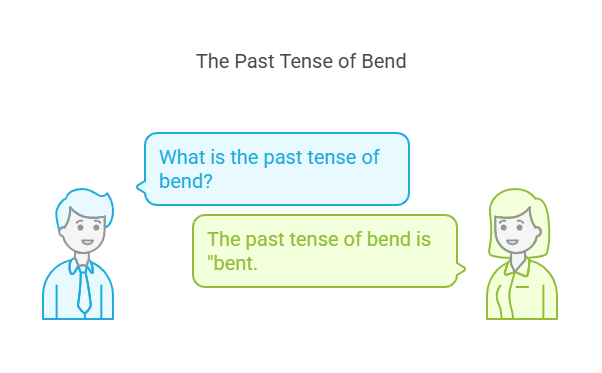
The Most Common Mistake With Bend
Even advanced learners say “bended” sometimes — so if you have made this mistake, you are not alone. It is very natural to want to add “-ed” because most English verbs work that way.
Mistake 1: Adding “-ed” to make the past tense
✗ She bended the spoon.
✓ She bent the spoon.
Mistake 2: Using “bended” with have/has/had
✗ He has bended the rules.
✓ He has bent the rules.
Mistake 3: Mixing up “bend” and “bent”
✗ I bend the metal bar yesterday.
✓ I bent the metal bar yesterday.
How to remember: Think of the word send → sent. It changes the same way: the “d” at the end becomes a “t.” So bend → bent, just like send → sent.
Other verbs like this: send → sent, spend → spent, lend → lent, build → built.
Test Yourself: Bend, Bent, or Bended?
Choose the correct answer for each sentence. Click Check to see if you are right.
1. She _______ the spoon with her hands yesterday.
2. He has _______ the wire into a circle.
3. I always _______ my knees when I lift heavy things.
4. The branch _______ under the weight of the snow last night.
5. They have never _______ the rules before.
Keep Going — You Are Building Something
You just learned bend → bent. That is one more irregular verb you will never get wrong again.
You now know that bend changes the “d” to a “t” — just like send → sent. But did you know that some verbs change in a completely different way? For example, the verb hide. Is the past tense hid or hidden? And when do you use each one? It is not as simple as you might think.
Next lesson: Hid or Hidden — Which One Should You Use and Why?
Source


My name is Khamis Maiouf. I am the creator of the English Teacher Site, dedicated to providing valuable resources and insights for students around the world. With a passion for education and a commitment to helping students enhance their skills, I aim to make English teaching more effective and enjoyable for both educators and students.