What’s the Plural of Swine: Exploring Singular and Plural Nouns

Quick Answer
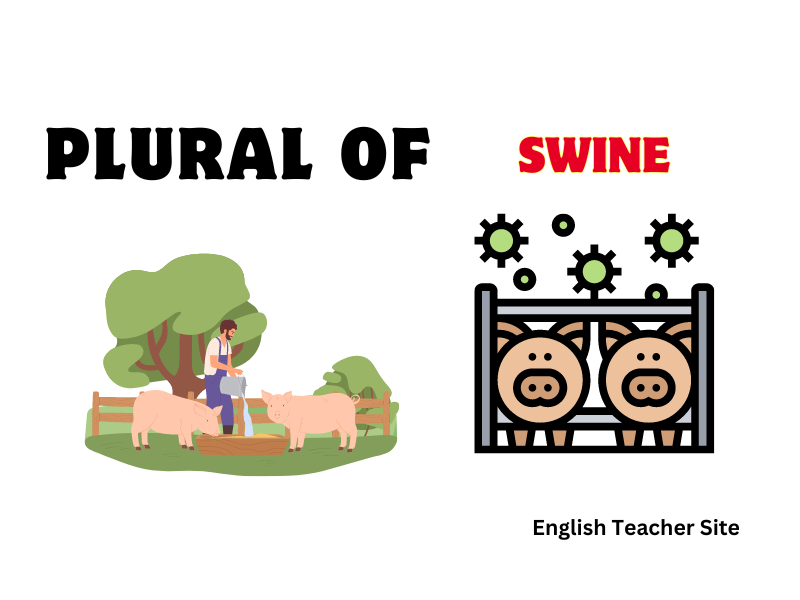
The plural of swine is swine. The word does not change. One swine, two swine, a hundred swine — it is always the same.
One Swine, Two Swine — See the Pattern
Look at these sentences. Can you see what happens to the word swine?
- The farmer has one swine on his farm.
- We saw twenty swine in the field.
- That swine is very large!
- These swine are eating from the trough.
Did you see the pattern? The word never changes. It stays swine every time — for one or for many.
| Singular (one) | Plural (many) |
|---|---|
| swine | swine |
Why Does Swine Stay the Same?
Most English words add -s to make a plural. One cat, two cats. One dog, two dogs. But some words do not follow this rule.
The word swine is very old. It comes from Old English (swīn), and back then it was already used for one pig or many pigs. English speakers kept the old form, so the word still does not change today.
Other animal words work the same way:
- one sheep → two sheep
- one deer → two deer
- one fish → two fish
- one moose → two moose
Easy way to remember: Think of farm animals standing in a row. They all look the same — and the word stays the same too!
The Rule in One Line: Swine is always swine — one swine, many swine, never swines.
How to Use Swine in Everyday English
Here are some real sentences you might read or hear:
- A baby swine was born last night on the farm. (one animal)
- The farmer keeps over fifty swine. (many animals)
- That swine needs food and water. (one animal)
- These young swine are growing fast. (a group)
- I have never seen a wild swine before. (one animal)
Quick note: In everyday English, most people say pig or pigs. The word swine is more formal. You will see it in farming, in old books, and in the phrase “swine flu.” But the rule is the same — it does not change for plural.
You are doing great. Now let’s look at the mistakes many learners make.
The Most Common Mistake With Swine
Even native English speakers sometimes write “swines” by mistake — so if you do it too, you are not alone. The most common error is adding an -s because that feels like the normal rule.
✗ The farmer has twenty swines.
✓ The farmer has twenty swine.
✗ Wild swines live in the forest.
✓ Wild swine live in the forest.
How to remember: Think of swine like sheep. You would never say “ten sheeps,” right? It is the same with swine. The word stays the same — always.
Other words that stay the same for one and many: sheep, deer, fish, moose, bison, salmon.
Test Yourself: Swine or Swines?
Choose the correct answer for each sentence. Click Check to see if you are right.
1. The farmer has thirty _______ on his farm.
2. A wild _______ was seen near the forest path.
3. We saw five _______ drinking water by the river.
4. That young _______ is only two weeks old.
5. How many _______ live on this farm?
Keep Going — You Are Building Something
You just learned that swine never changes — one swine, many swine. That is one more tricky plural you will never get wrong again.
But here is something interesting: not every animal word stays the same. The word fox does change — but it does not just add -s. One fox, two foxes. Why -es and not -s? And which other words follow this hidden rule?
Next lesson: What’s the Plural of Fox?
Sources

My name is Khamis Maiouf. I am the creator of the English Teacher Site, dedicated to providing valuable resources and insights for students around the world. With a passion for education and a commitment to helping students enhance their skills, I aim to make English teaching more effective and enjoyable for both educators and students.